 By Emily Parker
Updated November 2026
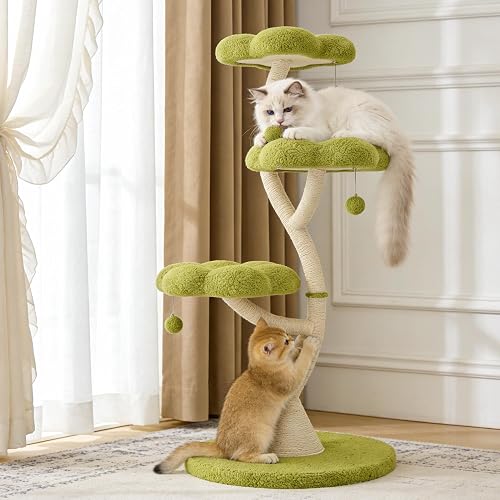
A tree trunk cat tree is a cat furniture piece built around a thick, natural-looking post, often wrapped in sisal rope or covered with bark-textured material. This guide explains how to judge whether a tree trunk cat tree is well built, how to place it, and how to get your cat using it from the first day.
Step 1: Check the Trunk and Base
The trunk carries most of your cat’s weight, so start there. A sturdy trunk is usually at least 3 inches in diameter at its narrowest point and wrapped tightly with no loose gaps. Manufacturers often list a weight limit; a cat tree rated well above your cat’s weight gives you a safety margin for jumps and sudden landings.
Shopping for one? See our guide: 6 Best Cat Trees for Bigger Cats (2026).
Next, look at the base. A wide, weighted base of at least 20 inches across keeps the tree from tipping when your cat launches itself upward. Press down on each platform and push the trunk from several sides before you trust it.
Step 2: Match the Height to Your Cat’s Habits
Height matters less than you might think. A cat that mostly naps and scratches does well on a tree with two or three levels around 40 to 50 inches tall. An athletic cat or one that loves to survey the room will want a top perch of at least 50 inches and a platform wide enough to turn around on, roughly 12 to 15 inches across.
For a cat with mobility issues or a senior cat, keep the lowest perch close to the floor and add a ramp or a mid-level step. The guide Cat Tree Older Cats: How to Choose One That Suits Senior Cats covers this in more detail.
Step 3: Choose the Right Place in Your Home
Placement decides whether the tree gets used. Put it near a window, where your cat can watch birds and people, or in a quiet corner where it can retreat. Avoid spots that block doorways or sit right against a radiator or heat source. For more on this, see Where to Put a Cat Tree for Safety and Activity.
If your cat is shy, place the tree where it can see the room but still feel covered. Cats often prefer a spot where they have a clear line of sight to the exit.
Step 4: Get Your Cat Using It
Most cats need a few days to accept a new tree. Rub a little catnip or silvervine on the lower platform, then reward your cat with a treat when it steps onto the tree. Play with a wand toy near the lower levels so your cat associates the tree with fun.
- Set the tree up in its final spot before the first session.
- Sprinkle catnip or use a treat on the lowest perch.
- Run a 5-minute wand-toy session near the tree once or twice a day.
- Move any toys or treats higher as your cat gains confidence.
- Check the trunk weekly for loose rope or wobbling and tighten anything that has shifted.
Common mistakes
- Buying a tree that is too light for your cat’s size or jumping style.
- Placing the tree where it blocks a litter box or food bowl route.
- Ignoring a loose or frayed trunk, which can cause falls or injuries.
- Expecting instant use; many cats take several days to warm up.
- Skipping the wobble test before letting a kitten climb.
Recommended gear
- A wand toy helps lure your cat onto the lower perches and builds positive associations with the tree. View on Amazon
- Catnip or silvervine spray makes the lower platform more inviting during the first week. View on Amazon
- A replacement sisal scratching post gives your cat a second scratching option if the trunk wears down. View on Amazon
FAQ
How tall should a tree trunk cat tree be?
Most adult cats do well with a tree 40 to 60 inches tall, with a top perch of at least 50 inches for climbers. Smaller or older cats may prefer a shorter model with more low steps.
Is a tree trunk cat tree safe for kittens?
It can be, provided the base is wide and heavy and the trunk is tightly wrapped. Check the weight rating and avoid trees with loose parts, dangling strings or gaps where a kitten could get stuck. Ask your veterinarian if you have concerns about your kitten’s development.
How often should I inspect the tree?
Check it at least once a week for loose rope, wobbling and worn platforms. Tighten or replace parts as needed to keep it stable.
Conclusion
A good tree trunk cat tree combines a sturdy, wide base, a trunk your cat can grip and platforms sized for its habits. Place it in a spot your cat already likes, encourage use with play and treats, and inspect it regularly. With those steps, most cats will adopt it within a week or two.
Related reading
Ready to choose one?
About Emily Parker
Emily Parker is part of our editorial team and reviews and edits our cats guides, checking product details against manufacturer specifications and owner feedback.