By Emily Parker
Updated November 2026
Cat tree ideas DIY projects range from a simple stacked-shelf tower to a full multi-level climbing structure. This guide covers six build concepts sorted by skill level, the materials each one needs, and the safety checks that matter most. By the end, you will know which design fits your space, your tools and your cat’s habits.
Start With Your Cat’s Needs and Your Space
Before you buy any lumber, decide what your cat actually needs. Most cats want a high perch with a clear view, a hiding spot, and a surface to scratch. Measure the floor area you can spare and the ceiling height. A tree that is too tall for the room or too close to a wall can cause falls or tip-overs. For guidance on placement, see Where to Put a Cat Tree for Safety and Activity.
Shopping for one? See our guide: DIY Cat Tree Designs: 3 Best Picks for Handy Owners (2026).
Six DIY Cat Tree Ideas by Skill Level
Beginner: Wall-Mounted Shelves
Mount three or four solid shelves to wall studs at staggered heights. Use shelf brackets rated well above the weight of your cat, and keep the spacing around 12 to 16 inches between levels so your cat can jump comfortably. This is the easiest option and needs only a drill, a stud finder and basic hardware.
Beginner: Carpeted Stacked Boxes
Stack two or three sturdy wooden boxes or crates, screw them together, and wrap each surface in sisal rope or carpet. Use a bottom platform at least 18 by 18 inches so the structure stays stable.
Intermediate: Freestanding Post and Platform Tower
Build a base from plywood, anchor a 4 by 4 post or heavy dowel into it, and attach platforms at intervals. Wrap the post in sisal rope for scratching. Add a bolted floor flange or a wide base so the tower cannot rock.
Intermediate: Tension-Mounted Hanging Perches
Use a heavy-duty tension pole between floor and ceiling, then attach fabric hammocks or padded perches. This suits renters and small apartments. Check the pole’s weight rating and the ceiling’s condition before you install it.
Advanced: Multi-Level Cabinet-Style Condo
Build a box frame with a sleeping cubby, an entry hole, and multiple platforms. Plan ventilation and avoid small enclosed spaces where a cat could get stuck. This build needs accurate cutting and solid joinery.
Advanced: Natural Branch Structure
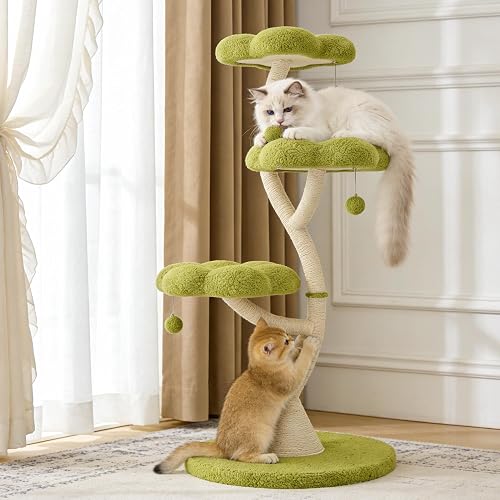
Use a sturdy, pest-free branch from a safe, untreated tree, cured and debarked, as the central trunk. Secure it to a weighted base. Confirm the wood is not toxic and has been properly dried before use. For a related approach, see Tree Branch Cat Tree: How to Build or Choose One That Your Cat Will Use.
Materials and Safety Checklist
- Plywood or solid lumber for bases and platforms, at least 3/4 inch thick
- Sisal rope or carpet for scratching surfaces
- Wood screws, brackets and a drill with bits
- A stud finder and level
- Non-toxic wood sealant or none at all
- Test every surface for wobble and sharp edges before your cat uses it
Common Mistakes to Avoid
- Building a tall, narrow tower with a small base, which tips easily.
- Using staples or thin nails that pull out under a cat’s weight.
- Leaving gaps where a cat’s head or paws could get trapped.
- Using treated lumber or finishes your cat might chew.
- Skipping a stability test before letting your cat climb.
Recommended Gear
A quality stud finder helps you anchor wall shelves safely to framing instead of drywall alone. View on Amazon
Sisal rope wrapped tightly around posts gives your cat a durable scratching surface that holds up better than loose fabric. View on Amazon
Heavy-duty shelf brackets rated for significant load let you build wall perches your cat can jump onto without flexing. View on Amazon
FAQ
Is a DIY cat tree safer than a store-bought one?
It can be, if you build it with solid materials, secure anchoring and proper stability testing. A poorly built DIY tree is less safe than a well-reviewed commercial one, so check every joint.
How much weight should a cat tree platform hold?
Plan for at least several times your cat’s body weight so the platform stays stable under jumps and stretching. Test it by pressing down firmly before use.
Can I build a cat tree with no tools?
Simple options exist, such as stacked crates held together with heavy-duty adhesive or a tension pole, but a drill and screws make the result far more secure. Consult a professional for any wall anchoring in an apartment.
Conclusion
The best cat tree ideas DIY projects match your skill, your space and your cat’s habits. Start with a simple wall shelf or stacked box if you are new to building. Move up to a freestanding tower or condo once you are comfortable with joinery and stability testing.
Related reading
Ready to choose one?
About Emily Parker
Emily Parker is part of our editorial team and reviews and edits our cats guides, checking product details against manufacturer specifications and owner feedback.