By Emily Parker
Updated November 2026
Cat litter boxes with lids can cut down on litter scatter, hide odors, and give shy cats more privacy. The trick is picking a lid style your cat will accept, then setting up the box so she can enter, turn around, and leave comfortably. This guide walks through the choice, the setup, and the upkeep. You may also like Cat Litter Boxes Electric: How to Choose and Use One (Step-by-Step).
Decide Whether a Covered Box Suits Your Cat
Covered boxes work well for many cats, but not all. Some cats feel trapped inside an enclosed space, especially if they have been startled while using a box before. Others are happy with the privacy. Watch your cat for a few days before committing. If she sniffs the entrance, hesitates, or backs out, an open or lower-entry style may be the better fit. We also found Cat Covered Litter Tray: How to Choose and Use One (Step-by-Step) useful on this point.
Shopping for one? See our guide: 5 Best Cat Litter Boxes with High Sides for Messy Cats (2026).
Lids also trap heat and moisture. If you are using a covered box, ventilation matters more than it does with an open tray, so check it often for ammonia smell.
Choose the Right Lid and Entry Style
Covered boxes come in a few main designs:
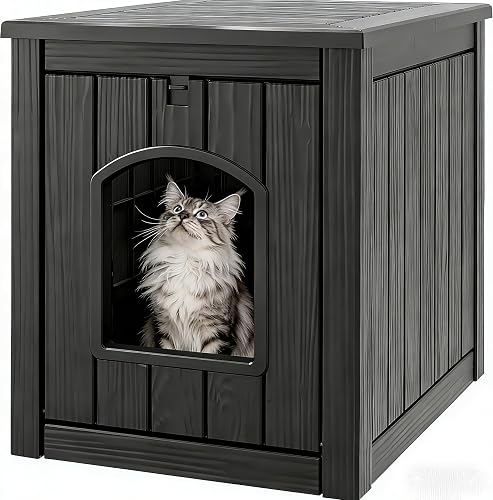
- Hooded boxes with a front door: The cat enters through a side or front opening. These usually have the most privacy but need enough interior space for her to turn around.
- Top-entry hoods: The cat jumps in from above. These suit cats who prefer height and do not like squeezing through a door.
- Lids with a flap: A swinging flap can keep litter in, but some cats dislike brushing against it, so test before relying on it.
Measure your cat before buying. Manufacturers generally recommend an interior length of at least one and a half times your cat’s body length, measured from nose to base of tail. For large cats, look for dimensions specified for big breeds. You can also read more in our guide on cat litter boxes for large cats.
Set Up the Box So Your Cat Will Use It
Placement affects use as much as the box itself. Put the box in a quiet spot with an easy escape route, not in a dead-end corner or next to a noisy appliance. Keep food and water well away from it. If you have more than one cat, provide one box per cat plus one extra.
- Choose a low-traffic room with two exits if possible.
- Fill the box with 2 to 3 inches of litter so your cat can dig.
- Leave the lid off or propped open for the first few days so she gets used to the box.
- Once she is using it reliably, fit the lid and watch whether her behavior changes.
For a broader look at setup, see Two Cat Litter Boxes: How to Set Up, Place and Maintain Them (Step-by-Step), which covers placement across multiple boxes.
Keep the Covered Box Clean
A lid makes it easy to forget the inside of the box. Scoop solid waste at least once a day and stir the litter so clumps do not build up underneath. Replace the litter fully every two to four weeks, and wash the box and lid with mild unscented soap and water. Dry it completely before adding fresh litter. Strong cleaners can leave smells that put cats off, so avoid them. A related read: Cat Litter Enclosed Boxes: How to Choose and Use One (Step-by-Step).
If your cat suddenly stops using the box, check the cleanliness and airflow first. Many changes in habit trace back to a box that has become stuffy or dirty. For other causes, see Why Cats Stop Using the Litter Box and How to Respond.
Common Mistakes
- Buying a box that is too small, so the cat cannot turn around comfortably.
- Forgetting ventilation, which lets ammonia build up inside the hood.
- Placing the box in a spot where the cat feels cornered.
- Switching to a covered box without a transition period.
- Skipping scooping because the lid hides the mess.
Recommended gear
- Covered litter box with a front entry: Gives privacy for cats who like enclosed spaces. View on Amazon
- Litter mat: Catches tracked litter around the entrance, which matters more with a hood. View on Amazon
- Scoop with a fine sieve: Makes daily cleaning quicker when you cannot see the whole box. View on Amazon
FAQ
Will my cat accept a covered litter box?
Many cats do, but some avoid enclosed boxes. Leave the lid off at first and watch her reaction before fitting it permanently.
How often should I clean a covered litter box?
Scoop solid waste daily and replace all the litter every two to four weeks. Wash the box and lid regularly with mild soap and water.
Can a covered box cause health problems?
Poor airflow can make the air smell strongly of ammonia, which may bother your cat’s sensitive nose. If you notice a change in urination or straining, contact your veterinarian, since those signs need professional attention.
Conclusion
A covered litter box can be a good choice when your cat likes privacy and you want less scatter. Pick a size and entry style that fits her, set the box up in a quiet spot, and keep it clean and ventilated. Watch her behavior during the switch, and adjust if she hesitates.
Related reading
- Top Entry Cat Litter Boxes: 7 Best Picks Compared (2026)
- How to Choose Cat Trees, Litter Boxes, Fountains, Feeders, Carriers and Scratching Posts
- High Sided Cat Litter Boxes: How to Choose the Right Height for Your Cat
- Everyday Cat Care: Grooming, Nail Trimming, Dental Care and Litter Boxes
Ready to choose one?
About Emily Parker
Emily Parker is part of our editorial team and reviews and edits our cats guides, checking product details against manufacturer specifications and owner feedback.