 By Emily Parker
Updated November 2026
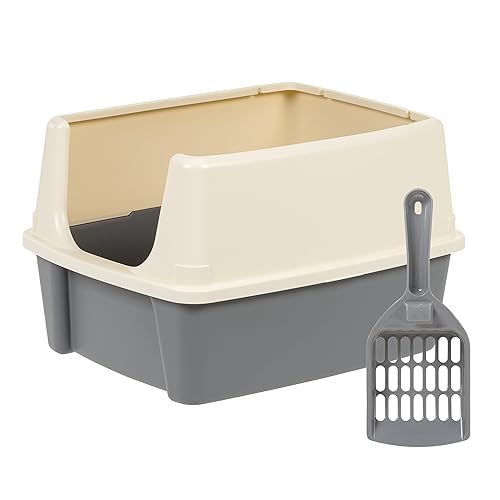
High sided cat litter boxes are designed to keep litter inside the box, and they are often the simplest fix for a cat who kicks litter across the floor. In this guide, you will learn how to measure your cat, compare wall heights, pick the right entry style, and set up a high-sided box so your cat uses it comfortably and your floors stay cleaner. The short answer: choose a box with walls at least 1.5 times your cat’s body length from nose to base of tail, make sure the entry is low enough to step into easily, and add a litter mat to catch what gets tracked out.
Why High Sided Litter Boxes Help Some Cats and Owners
Most litter scatter happens during digging and kicking. A cat scratches the surface, turns around, and pushes litter backward with both back feet. Taller walls catch much of that material before it leaves the box. Owners often report that high sides reduce the sprinkle zone around the box, which matters most in homes with hard floors or carpet near the litter area.
Shopping for one? See our guide: 5 Best Cat Litter Box Crystals of 2026: Picks Compared.
High sides are not the answer for every cat. Older cats, cats with arthritis, kittens, and cats recovering from surgery may struggle to climb over a tall wall. Before buying, think about your cat’s mobility and habits. For a broader look at how box styles compare, see Different Types of Litter Boxes and Their Pros & Cons.
Step 1: Measure Your Cat Before You Shop
Size matters more than most owners expect. A box that looks deep enough may still be too small once your cat turns around inside it.
How to measure
- Weigh your cat or estimate weight from your last vet visit. Typical adult domestic cats weigh roughly 8 to 12 pounds, while large breeds such as Maine Coons can exceed 15 pounds.
- Measure body length from the tip of the nose to the base of the tail while your cat is lying relaxed on a flat surface.
- Add about 50 percent to that number. That is a reasonable minimum for box length, and many cats prefer more room to turn.
- Measure the cat’s height when sitting, from the floor to the top of the head. The box interior should allow this height with clearance.
Kittens and senior cats
Kittens need a low entry point and a box that is not too large for their short legs. Many veterinary behaviorists suggest a low-entry tray for kittens under about six months, then moving to a high-sided model once they are fully grown. Senior cats may need the same treatment. If your older cat is slowing down, choose a box with a low front lip and tall back and side walls, which gives a step-in entry and still contains litter.
Step 2: Choose the Right Wall Height
Wall height is the main feature in this category. Manufacturers vary, so compare the actual interior measurement rather than the marketing label.
| Cat profile | Suggested wall height | Entry style |
|---|---|---|
| Kitten under 6 months | 3 to 4 inches | Low lip or open tray |
| Average adult cat | 5 to 6 inches | Front entry dip or low lip |
| Large or long cat | 6 to 8 inches | Wide front entry |
| Senior or arthritic cat | 4 to 5 inches at the front, taller at the back | Low step-in entry |
| Heavy digger | 6 inches or more | Standard front entry |
These ranges are general guidelines. If your cat jumps over the wall easily or still kicks litter out, move up one size.
Front entry vs. top entry
A front-entry high-sided box keeps the tall walls on three sides and uses a dip or cutout in the front. Top-entry boxes have an opening in the lid, which is great for containing spray but can feel cramped for some cats. Many owners find front entry more comfortable, especially for cats who need to see their surroundings before stepping in.
Step 3: Set Up the Box for Success
Litter depth and type
Fill the box to about 2 to 3 inches of litter. Too little litter exposes the bottom and encourages scratching at the floor, while too much can make digging feel awkward. Choose a litter your cat already accepts. For help picking material, read How to Choose Cat Litter and a Litter Box.
Placement
Place the box in a quiet spot with an easy exit. Avoid corners where your cat can feel trapped, and keep it away from food and water bowls. Follow the general rule of one box per cat plus one extra. More guidance is in How Many Litter Boxes Do You Need and Where to Put Them.
Tools and supplies to have on hand
- A high-sided box sized to your cat’s measurements
- A litter scoop with fine tines for clumps
- A large litter mat to catch tracked-out granules
- Unscented litter that matches your cat’s preferences
- Enzyme or unscented cleaner for spills and accidents
Step 4: Introduce the New Box Gradually
Cats are creatures of habit, and even a better box can feel strange. Keep the old box in place for at least one to two weeks while the new high-sided box is added beside it. Once your cat uses the new box consistently, remove the old one. If your cat avoids the new box, check whether the walls feel too tall at the entry, then lower the front or try a different style.
Step 5: Maintain Cleanliness Consistently
Tall walls do not replace regular cleaning. Scoop solid waste at least once a day and fully change the litter on a schedule that matches your litter type. Many clumping clay litters need a full change every 3 to 4 weeks, while silica and some natural litters have different timelines. For a routine you can follow, see How Often to Scoop and Change Cat Litter: A Cleaning Routine.
Odor control matters too. If you notice smell even after scooping, consider the techniques in Natural Ways to Control Cat Litter Box Odor.
Common Mistakes
- Buying by brand alone. Two boxes with the same name can differ in wall height. Always check the interior dimensions.
- Choosing walls that are too tall for a small or older cat. If your cat has trouble stepping in, the box becomes a barrier rather than a solution.
- Skipping the litter mat. High walls reduce scatter, but tracking still happens on the way out.
- Removing the old box too quickly. A gradual switch prevents avoidance.
- Ignoring pain signs. If your cat strains, cries, or stops using the box, the box is only part of the picture. Contact your veterinarian promptly, since urinary blockage in cats is an emergency.
Tips for Success
- Place a litter mat with a textured surface just outside the entry.
- Use a box with a lid only if your cat has shown no sign of avoiding enclosed spaces.
- Watch your cat’s entry and exit for a week. If they hesitate or jump awkwardly, lower the front lip.
- Keep the litter area clear so your cat can approach and leave easily.
Recommended gear
These types of products are commonly used alongside high sided cat litter boxes. Choose a size that matches your measurements from earlier in this guide.
- Large high-sided litter box with front entry – Walls of 5 to 6 inches help contain litter for average adult cats. View on Amazon
- Extra-large high-sided litter box – Useful for long or heavy cats who need more interior room. View on Amazon
- Textured litter trapping mat – Catches granules tracked out of the box and protects flooring. View on Amazon
- Fine-tine litter scoop – Makes it easier to lift clumps without pulling up loose litter. View on Amazon
FAQ
Are high sided cat litter boxes good for older cats?
They can be, but only if the entry is low enough. Choose a box with a lower front lip and taller back and side walls. Cats with arthritis or mobility issues often do better with a step-in design.
How tall should the walls be for a large cat?
Walls of 6 to 8 inches are common for large cats. Measure your cat first and make sure the interior is long enough for a full turn-around.
Do high sides stop all litter tracking?
No. They reduce scatter from digging and kicking, but cats still carry granules on their paws. A textured mat at the entry helps catch most of it.
Will my cat refuse a high-sided box?
Some cats need time to adjust. Keep the old box nearby for one to two weeks, then remove it once your cat uses the new box reliably.
Can kittens use high-sided boxes?
Kittens usually do better with a low-entry tray until they are around six months old. After that, a high-sided model with a front dip works well.
Should I use a covered high-sided box?
Covered boxes can help with odor and spray, but some cats dislike enclosed spaces. Watch your cat’s behavior before committing to a lid.
What if my cat still urinates outside the box?
Box design is rarely the only cause. Medical problems, stress, and litter preferences all matter. If the behavior is new, see your veterinarian first, then review Why Cats Stop Using the Litter Box and How to Respond.
Conclusion
High sided cat litter boxes work best when you match wall height and entry style to your cat’s size, age, and mobility. Measure your cat, choose a box with walls that contain litter without blocking entry, and introduce it gradually. Pair the box with a litter mat and a regular cleaning routine for the cleanest results.
Ready to choose one?
About Emily Parker
Emily Parker is part of our editorial team and reviews and edits our cats guides, checking product details against manufacturer specifications and owner feedback.