 By Emily Parker
Updated November 2026
A cat tree that looks like a tree can fit into your living room without looking like a plastic playground, and it can still give your cat climbing, scratching and perching space. The trick is to match the look to the features cats actually use: sturdy trunks, sisal-wrapped posts, real-looking branches and enough platforms to move between. This guide walks you through how to judge the design, the materials and the layout so you end up with a tree your cat will use. Worth reading next: Cat Tree Go Pet Club: How to Choose the Right One for Your Cat (2026).
Start With the Look You Want and the Space You Have
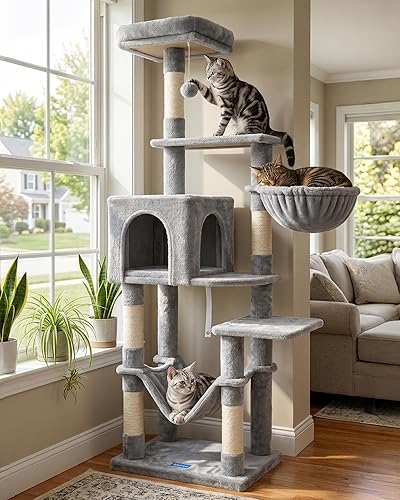
Most cat trees that look like a tree use a central trunk wrapped in bark-patterned carpet, rope or faux wood, with branch-like platforms radiating out. Before you shop, measure the floor footprint and the ceiling height. A tree that tops out at about 5 to 6 feet suits most rooms, while taller models need a wall or a corner for safety. Check the official manufacturer listing for exact dimensions, since “tree” styles vary a lot in width.
Shopping for one? See our guide: 6 Best Cat Trees for Bigger Cats (2026).
Check Construction and Stability
A tree-style tower only works if it doesn’t wobble when your cat jumps. Look for these features:
- A base at least as wide as the tallest platform’s footprint, or a weighted base plate
- Scratching posts wrapped in sisal rope, not thin cardboard, with a diameter of roughly 3 inches or more so claws can grip
- Platforms built on solid board or plywood, not loose particleboard that sags under a 15-pound cat
- Screws or bolts that tighten into the frame, which you can recheck every few months
Once it’s assembled, give the tree a firm push at the top. Any noticeable sway means the base or the joints need reinforcing.
Plan Platforms, Perches and Hideaways
Cats use a tree differently than they use a scratching post. They want places to sit at several heights, look out windows and hide when they feel uneasy. A layout that works well usually includes: We also found Cat Tree at Petco: How to Choose the Right One for Your Cat useful on this point.
- A lower platform about 12 to 15 inches off the floor, so older or arthritic cats can reach it
- One or two mid-height perches around 2 to 3 feet up, ideally near a window
- A top platform for lookout, with enough room for your cat to lie flat
- An enclosed den or cube if your cat likes privacy
Gaps between platforms should be short enough that a jump feels comfortable. If your cat is a sprinter or a heavier breed, leave space for a running start.
Choose Materials That Suit Your Cat’s Habits
Materials affect both durability and how the tree looks. Sisal rope is the standard for scratching, and carpet or faux bark works well on platforms. Some owners find that cats avoid carpet that feels thin or sticky, so test by running your hand over the surface. Real wood branches look natural but can splinter, so inspect them before use. Keep the tree away from heaters and sunny spots where materials can dry out or warp.
Common Mistakes
- Buying the tallest model for a small room, which can make the tree tip
- Choosing a decorative tree with only one scratching post, leaving your cat little to scratch
- Placing the tree in a corner with no line of sight, so your cat feels trapped
- Ignoring loose bolts, which become a safety problem over time
- Skipping a sturdy base, even on a slim tree
Recommended Gear
If you want a tree-style look with a strong base, look for a model from a brand known for heavy-duty cat furniture. View on Amazon
A cat tree with a faux bark or carpeted trunk and wide platforms suits owners who want a natural look. View on Amazon
For a cat that prefers a tree with cozy hideaways, a model with an enclosed cube is a good match. View on Amazon
FAQ
Are cat trees that look like trees safe for kittens?
They can be, as long as the base is wide and the platforms are low and close together. Keep the tree away from windows that open far enough for a kitten to fall through. You may also like Cat Tree Tension Rod: How to Choose, Install and Use One Safely.
How tall should a cat tree be?
For most homes, 4 to 6 feet is a comfortable range. Taller trees should be anchored to a wall, and you should always follow the manufacturer’s height and weight limits. For a deeper look, Cat Tree Older Cats: How to Choose One That Suits Senior Cats covers this in detail.
How do I get my cat to use a new tree?
Place a favorite toy or treat on the top platform, and sprinkle a little catnip on the lower posts. Be patient, since some cats take several days to explore a new piece of furniture.
Conclusion
A cat tree that looks like a tree can blend into your home and still meet your cat’s needs for climbing, scratching and hiding. Focus on a stable base, sturdy sisal posts and a layout that suits your cat’s age and size. If your cat has mobility issues or a health concern, check with your veterinarian before choosing a tall model.
Related reading
- Cat Trees, Scratching Posts, Beds and Window Perches: What to Look For
- Where to Put a Cat Tree for Safety and Activity
- Warrior Cat Family Tree: How to Map the Clans and Lineages Step by Step
Ready to choose one?
About Emily Parker
Emily Parker is part of our editorial team and reviews and edits our cats guides, checking product details against manufacturer specifications and owner feedback.