
 By Emily Parker
Updated November 2026
Big cats need more room than a standard plastic tray can give them, and many owners of large or heavy cats find that a typical box leads to tracked litter, leaking corners and a cat that simply won’t use it. This guide looks at cat litter boxes for big cats and compares three extra-large stainless steel models. Our selection criteria were interior length and width, wall height, leak and urine containment features, lid and footboard design, ease of cleaning, and the consistency of owner feedback about durability and odor.
Our top picks at a glance
- 1
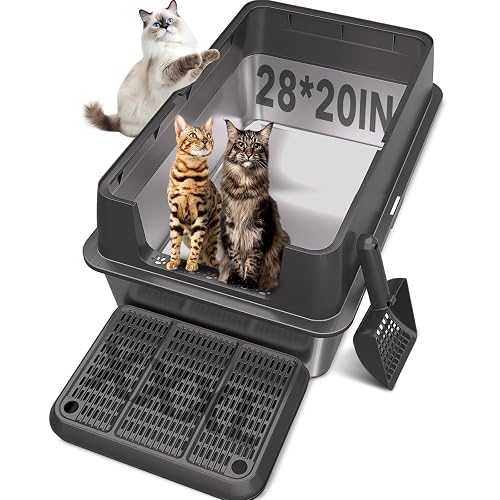 TOP CHOICEBest overallXXL Stainless Steel Litter Box with Lid, 28" L x 20" WView on Amazon
- 2
 Best for multi-cat householdsStainless Steel Litter Box, Extra Large with LidView on Amazon
- 3
 Best value for two boxes2PACK Stainless Steel Litter Box, Extra LargeView on Amazon
Our Top Picks
The table below summarizes how the three models differ. Each product is covered in more detail afterward.
Quick Comparison
| Product | Best for | Key feature |
|---|---|---|
| XXL Stainless Steel Litter Box with Lid, 28″ L x 20″ W | Very large cats and owners who want maximum floor space | 28-inch length with footboard and anti-leakage design |
| Stainless Steel Litter Box, Extra Large with Lid | Multi-cat homes and households with a hooded-style preference | High sides with included lid and scoop |
| 2PACK Stainless Steel Litter Box, Extra Large | Owners who want a spare box for rotation or cleaning days | Two-box set with high sides and non-sticky finish |
XXL Stainless Steel Litter Box with Lid, 28″ L x 20″ W
XXL Stainless Steel Litter Box with Lid, 28" Lx20 W Extra Large Cat Litter Boxes for Big Cats, Jumbo Metal Litter Box with Footboard & Scoop,Anti-Leakage,Non-Sticky,Odorless,Easy to Clean
Best for: Very large cats and owners who want maximum floor space
This is the most spacious of the three and suits cats that stretch out fully, turn around comfortably, or are heavy enough to struggle with smaller pans. It also works well in households where a cat tends to dig vigorously and scatter litter over the edges.
Key specs:
- Listed interior size: 28 inches long by 20 inches wide
- Stainless steel construction with a lid
- Includes a footboard and scoop
Pros:
- Generous length gives large cats room to turn and dig
- Footboard helps catch litter tracked out on paws
- Smooth, non-sticky surface that owners often report is easy to wipe clean
Cons:
- Its footprint is large and may not fit in a small bathroom or closet
- Heavier than plastic boxes, which can make moving it for deep cleaning harder
Bottom line: The best choice for a single very large cat when floor space is available and you want the most room possible.
Stainless Steel Litter Box, Extra Large with Lid
Stainless Steel Litter Box, Extra Large Litter Boxes for Big Cats, XLarge Metal Cat Litter Box with Lid, Anti-Urine Leakage XL Box with High Sides, Easy Clean, Non-Sticky, Scoop Included
Best for: Multi-cat households and households with a hooded-style preference
This model is aimed at owners who want an enclosed look with a lid while still offering a large interior. Its high sides suit cats who tend to kick litter out of the box, and the enclosure can help reduce visible odor in shared spaces.
Key specs:
- Extra-large interior designed for big cats
- Stainless steel body with high sides and a lid
- Scoop included
Pros:
- High walls help contain kicked litter and reduce spillage
- Lid helps limit odor and keeps the box out of sight
- Stainless steel is non-porous and, according to many owners, holds up well to repeated cleaning
Cons:
- Enclosed designs can be harder for some cats to enter or check, especially cats that prefer open boxes
- Lid and sides add weight and bulk when cleaning
Bottom line: A good fit for a big cat in a shared home where discretion and containment matter, but introduce the lid gradually if your cat is cautious.
2PACK Stainless Steel Litter Box, Extra Large
2PACK Stainless Steel Litter Box, Extra Large Litter Boxes for Big Cats, XL Metal Cat Litter Box with Lid High Sides, Anti-Urine Leakage, Non-Sticky, Scoop Included
Best for: Owners who want a spare box for rotation or cleaning days
This two-pack gives you a backup box so you can swap one out while the other is washed and dried. It is also a practical option for homes with more than one large cat, or for putting one box on each floor.
Key specs:
- Sold as a two-box set
- Extra-large stainless steel boxes with high sides
- Scoop included
Pros:
- Two boxes allow rotation so no box stays dirty for long
- High sides and anti-leakage design help with kicked and tracked litter
- Non-sticky finish that owners often report is easy to rinse
Cons:
- Requires twice the floor space if you use both boxes at once
- Open-style boxes may not suit cats that prefer covered privacy
Bottom line: Pick this if you want a ready spare and plan to keep two large boxes in service.
Buying Guide
Interior size and length
For a big cat, look for an interior length that lets the cat turn around and fully lie down without its tail or hind legs hanging over the edge. A common guideline among cat owners is that the box should be at least one and a half times the cat’s body length from nose to tail base, though this varies by cat and by how much digging the cat does.
Good picks for this: XXL Stainless Steel Litter Box with Lid, Stainless Steel Litter Box Extra Large with Lid
Wall height and containment
High sides reduce kicked litter and spillage on the floor. Many owners of vigorous diggers choose boxes with walls several inches above the litter line. Check the listed height and compare it to how much your cat scatters.
Good picks for this: Stainless Steel Litter Box Extra Large with Lid, 2PACK Stainless Steel Litter Box Extra Large
Lid and privacy
Lids can reduce odor and visual clutter, but some cats avoid enclosed boxes. If you choose a lid, introduce it gradually by first using the open box alongside the lidded one, then removing the open one once the cat is comfortable.
Good picks for this: Stainless Steel Litter Box Extra Large with Lid, XXL Stainless Steel Litter Box with Lid
Footboard and entry design
A footboard or entry lip catches litter tracked out on paws and gives the cat a step-up that is easier on joints. This matters more for older or heavier cats.
Good picks for this: XXL Stainless Steel Litter Box with Lid, 2PACK Stainless Steel Litter Box Extra Large
Material and durability
Stainless steel is non-porous, so it does not absorb urine odor the way some plastics can over time, and it resists scratching. Check the seams and corners for tight welds, since gaps are where residue can build up.
Good picks for this: XXL Stainless Steel Litter Box with Lid, 2PACK Stainless Steel Litter Box Extra Large
Cleaning and care
Choose a box with smooth, rounded corners and a non-sticky surface so litter and waste do not cling. Plan to wash the box with mild unscented soap and warm water, rinse fully, and dry before refilling. Avoid harsh chemicals that can leave residue cats find off-putting.
Good picks for this: 2PACK Stainless Steel Litter Box Extra Large, Stainless Steel Litter Box Extra Large with Lid
Household size and placement
Consider how many cats share the space and where the box will sit. A single very large cat may do best with one extra-large box, while multi-cat homes often need one box per cat plus one extra. For more on this, see How Many Litter Boxes Do You Need and Where to Put Them.
Good picks for this: 2PACK Stainless Steel Litter Box Extra Large, Stainless Steel Litter Box Extra Large with Lid
FAQ
How big should a litter box be for a large cat?
A common rule is that the box should be at least one and a half times your cat’s body length, measured from nose to the base of the tail. The cat should be able to turn around and lie down fully inside. If your cat regularly hangs its hindquarters over the edge, the box is too small.
Are stainless steel litter boxes better than plastic for big cats?
Stainless steel is non-porous and resists scratching, which can make it easier to keep clean and less likely to hold onto odor. Plastic can be lighter and cheaper, but scratches can trap residue over time. Many owners prefer stainless steel for durability, though cat comfort depends on the individual animal.
Should I get a covered or open litter box for my big cat?
Open boxes are usually easier for cats to enter and inspect, and they are the default choice for many cats. Covered boxes can help contain odor and litter, but some cats avoid them. If you use a lid, introduce it gradually and keep an open box available at first.
How often should I clean a large litter box?
Scoop solid waste daily and wash the box with mild soap and water at least every one to two weeks, depending on how many cats use it. Full guidance is in How Often to Scoop and Change Cat Litter: A Cleaning Routine.
Do I need one litter box per cat if I have a big cat and another cat?
A widely cited guideline is one box per cat plus one extra, so two cats would typically use three boxes. This reduces competition and territorial behavior. Placement and cleanliness matter as much as the count.
Why does my big cat step outside the box?
Common reasons include a box that is too small, sides that are too low, litter the cat dislikes, or a location the cat finds stressful. Medical issues such as urinary problems can also cause this behavior. If the problem is sudden or ongoing, consult your veterinarian. You can read more in Why Cats Stop Using the Litter Box and How to Respond.
Can a litter box with high sides help a messy cat?
Yes. High walls reduce kicked-out litter and spillage. Pairing a high-sided box with a footboard can also cut down on tracked litter. For a closer look at height, see High Sided Cat Litter Boxes: How to Choose the Right Height for Your Cat.
Conclusion
For a single very large cat with room to spare, the XXL Stainless Steel Litter Box with Lid offers the most floor space. For a shared home where containment and privacy matter, the Stainless Steel Litter Box, Extra Large with Lid is a strong fit. If you want a spare box for rotation or plan to use two boxes, the 2PACK Stainless Steel Litter Box, Extra Large covers that need. In every case, measure your cat and your floor space first, and introduce any new box gradually.
Sources
- Guidance on litter box setup, placement and common litter-related behavior in cats (aspca.org)
- Veterinary association information on feline health and litter box considerations (avma.org)
- Breed and care information that can help estimate typical adult cat size
Related reading
- Two Cat Litter Boxes: How to Set Up, Place and Maintain Them (Step-by-Step)
- Top Entry Cat Litter Boxes: 7 Best Picks Compared (2026)
About Emily Parker
Emily Parker is part of our editorial team and reviews and edits our cats guides, checking product details against manufacturer specifications and owner feedback.
