 By Emily Parker
Updated November 2026
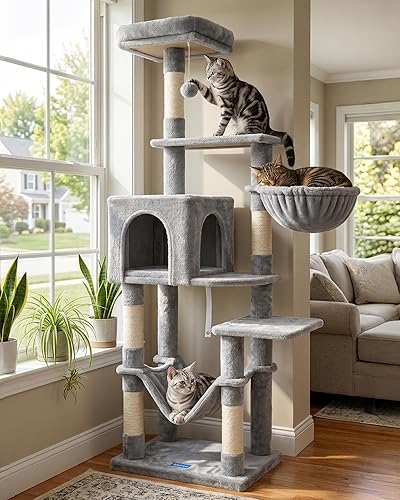
A cat tree go pet club search usually means one of two things: you want to know whether a Go Pet Club cat tree suits your cat, or you want a general method for picking a tree that will actually get used. This guide covers both. You will learn how to size a tree for your cat, check the build quality that matters, place it where your cat will climb, and avoid the mistakes that leave expensive furniture sitting unused.
Step 1: Measure Your Cat and Your Space
Start with your cat’s measurements, not the product photos. Measure your cat from nose to base of tail, then note how high she can jump in one bound (most healthy adult cats can reach roughly five to six feet vertically). A tree tall enough to give her a high perch is more useful than one that simply looks big in the listing. We also found Cat Tree at Petco: How to Choose the Right One for Your Cat useful on this point.
Shopping for one? See our guide: 6 Best Cat Trees for Bigger Cats (2026).
Next, measure the floor space. Allow at least 18 inches of clearance on every side so the base doesn’t sit against a wall, and check the ceiling height if you plan a tall model.
Step 2: Check Stability and Build Quality
A wobbly tree is the fastest way to lose a cat’s trust. Look for:
- A wide, heavy base, ideally with a footprint at least as wide as the tallest platform is high (or a floor-to-ceiling tension design if you use one)
- Sturdy posts wrapped in sisal rope, with the rope tight and fully covering the post
- Platforms that are fully supported, with no flexing when your cat jumps on or off
- Cozy perches and hideaways that are big enough for your cat to turn around in
Shake the tree gently once assembled. If it rocks, tighten every bolt and check that the base is level. Re-check after the first few weeks, since screws can loosen as cats climb.
Step 3: Match the Tree to Your Cat’s Habits
Different cats want different things. A young, energetic cat needs height and multiple perches. An older or heavier cat needs lower steps and wider platforms so she doesn’t have to leap. Cats that scratch the sides of furniture need full-length sisal posts, and cats that like privacy respond well to enclosed condos.
| Cat type | What to prioritize |
|---|---|
| Kitten or young adult | Height, multiple levels, scratch posts |
| Senior or heavier cat | Low steps, wide platforms, soft bedding |
| Shy or anxious cat | Enclosed condos, a perch near a window |
| Multi-cat home | Several perches, more than one escape route |
Step 4: Place the Tree Where It Will Be Used
Put the tree near a window or in a room where your household spends time. Cats prefer to watch activity, and a tree tucked in a dead corner often goes unused. Keep it away from heaters, and make sure your cat can reach it from the floor without crossing a busy path. For more on placement, see Where to Put a Cat Tree for Safety and Activity.
Common Mistakes to Avoid
- Buying a tree that is too short for your cat’s jumping ability
- Ignoring stability and skipping the tighten-and-check step after assembly
- Placing the tree in a spot your cat never passes
- Choosing carpeted posts for a cat who prefers to scratch rope or wood
- Forgetting that a tree needs regular cleaning, so plan for it. How to Clean a Cat Tree: A Step-by-Step Guide for Beginners covers this.
Recommended Gear
- Tension rod cat tree: useful in rooms where you can’t add a freestanding base. View on Amazon
- Sisal scratching post: a replacement post or add-on that gives your cat a durable scratch surface. View on Amazon
- Cat tree cushion pad: adds softness to platforms, which helps older cats. View on Amazon
FAQ
Is a Go Pet Club cat tree safe for kittens?
It can be, as long as the base is stable and the platforms are securely attached. Supervise kittens on high perches until you are sure they can climb and descend safely.
How do I know if my cat will actually use the tree?
Watch her behavior for a few days. Cats that sit near it, sniff it or climb partway are showing interest. Adding a treat or a favorite toy to the top platform often encourages her to explore.
Should I consult a vet before buying a cat tree?
Most healthy cats do fine on a standard tree, but senior cats or cats with joint problems may need lower, wider steps. If your cat has mobility issues, ask your veterinarian what height and layout is appropriate.
Conclusion
A good cat tree is sized to your cat, built to stay still under her weight, and placed where she will use it. Measure first, check stability and match the layout to her habits. Those three steps do more to determine whether a cat tree gets used than the brand name on the box.
Related reading
- Warrior Cat Family Tree: How to Map the Clans and Lineages Step by Step
- How to Get Cat Down From Tree: A Step-by-Step Guide That Works
Ready to choose one?
About Emily Parker
Emily Parker is part of our editorial team and reviews and edits our cats guides, checking product details against manufacturer specifications and owner feedback.